Words used to matter. They held weight. They conveyed big ideas. They shared stories and brought us closer together as communities. But in an age where sound bites and video are king, does the written word matter any more?
When the average length of a reel on Instagram is seven seconds, do we have the attention span to read a blog or dive into a magazine article?
I strongly and vehemently believe that words DO matter: that the unique truths we can convey, and the insights we can share, are vital to human communication.
I also believe that it’s important to uphold the standards of quality, storytelling and insightful writing when it comes to producing content for your business.
So, why are we devaluing and commoditising the words in our content?
The crusade for brevity (and the effect on our attention span)
Words surround us every day. There are straplines on advertising screens, headlines on print media and innumerable signs that tell where to go and when to stop etc.
When we comprehend the language, these words become integral to our modern lives, whether on a phone screen, the side of a bus or staring up at us from a book.
Think how many words you read in a day. Add up the WhatsApp messages, the emails in your work inbox, the text in your Instagram stories, the book you might read before bedtime, the report you have to read before tomorrow’s meeting.
Words are still important. In fact, we use them continually. But, increasingly, we’re devaluing the process of actually writing these words, and scaling back the depth of the ideas they convey.
Social media has played a large part in this. Ever since microblogging became a thing with the success of Twitter, back in 2009, we’ve started to pare back our words. The short wordcount limitations of social platforms encouraged us to be brief and succinct.
‘Another sunny day on hols. Loving the coffee here in Sydney’ is the kind of thing you might write. Short, concise and without much detail. That’s not necessarily a bad thing. Brevity in writing can certainly be a good thing, cutting through the crap to get to the very heart and essence of the message. In some instances, that’s exactly what you want.
But (and it’s a major ‘but’) social media has shortened our attention span.
We expect the whole world to be offered to us in bite-size chunks.
Anything longer than a paragraph is ‘too long and boring’. In striving for brevity, we’ve accidentally made our human brains incompatible with long-form text and complex ideas. If we can’t understand something in one brief sentence, with an accompanying hashtag, then we’re just not interested.
In a world where so much of the complexity of human life needs to be communicated through words, this lack of attention can become something of a problem.

Firing up the content pipeline (and to hell with the quality)
A desire to avoid long and ‘wordy’ text isn’t the only issue we face.
There’s also the underlying problem of a lack of quality in the writing we encounter on a day-to-day basis, especially when it comes to business and marketing content that’s intended to get our customers talking.
Listen to any SEO (search engine optimisation) expert and they’ll tell you that search engines love longer-form content. In the business world, we’re told we should be publishing regular blog posts, firing out long-form guides and sharing our in-depth thoughts and opinions through our company and personal social media accounts.
In essence, we’re told that we should become content producers, pumping out words and text at a rate of knots to improve our SEO scores, engage with our customers and convert our warm targets into real prospects and paying customers.
But (and again, this is an important ‘but’), not all of us have the time, the inclination or the writing skills to produce this engaging, SEO-friendly content. So, if you’re a business owner who knows they should be producing content, what do you do?
Here are a few of the most common routes to take:
- You write the content yourself. Pro: there’s no extra cost and you’re in control of the content. Con: it takes a lot of time, and you’re also probably not a professional writer, so the quality of the content may not be great.
- You hire an in-house marketing person to write and produce your content. Pro: you can delegate the content creation and get great quality copy. Con: hiring another employee is expensive and another drain on your finances.
- You work with a marketing agency. Pro: the whole marketing and content process gets taken care of by the agency. Con: it’s eye-wateringly expensive!
- You engage a freelance writer. Pro: it’s cheaper than hiring an employee (no benefits or sick pay etc.) and far cheaper than an agency. Plus you get high-quality content. Con: your freelancer can be busy and not always available.
- You use AI to write the content. Pro: it’s free, or dirt cheap, and you quickly have some content to post. Con: unless you edit it very skillfully, your ‘cheap and fast’ content will be generic, boring and free of any original insights.
In 2024, with generative AI tools like ChatGPT and Google Gemini just a few button clicks away, many marketing leads and business owners are choosing Option #5.
It’s understandable. In a cost-of-living crisis, and in the middle of a talent shortage, why wouldn’t you choose the cheap and easy option of typing a half-baked prompt into ChatGPT and getting a 1,000 word blog post delivered to you in a few seconds?
By using AI to generate your own content, you can feed the ever-hungry content pipeline, keep your SEO score looking healthy and tick that task of writing this month’s blog article off your to-do list for a while.
However, have you ever read an AI-generated article? I mean REALLY read it?
Yes, the grammar is reasonable, the spelling is probably better than your own and it looks, on first glance, as if it’s a great piece of writing.
But take a longer look and dig a little deeper:
- It lacks humanity – in the same way that generative AI art tools can’t do fingers, AI copy tools can’t do humanity. There’s a distant and disconnected feel to AI writing that comes from the generic way that it’s produced, using multiple different data sources. It’s a shadow of real content, without any of the intrinsic, human qualities we like in our writing.
- It lacks unique insight – AI can’t come up with ideas of its own. It can only synthesise similar ideas from the terrabytes of pre-existing knowledge and writing in its central data source. If you want to express a new or novel idea, show some detailed insight into your industry, or convey an innovative idea to your targeted customer audience, AI is going to fail.
- It’s vanilla and lacks depth – a cursory readthrough of an AI article might give a decent initial first impression. But when you scratch the surface, you find that there’s very little depth. There are no personal stories, no individual perspectives. Just broad-base, generic concepts that already exist out there on the internet. As I pointed out a while back, AI writing is the pot noodle of content – fast and easy to make, but ultimately unsatisfying.
- It sounds just like everyone else – your business content is supposed to uniquely position your company and brand in the marketplace. It’s designed to show how you’re different and to put your messaging front and centre for your target audience. This is difficult to achieve when your posts sound exactly like everyone else’s content.

AI is a tool, not a replacement for good writing
So, is generativeAI all bad? Short answer, no, it isn’t!
Generative AI tools can be extremely useful for summarising long passages of text, coming up with content structures, or roughing out the general outline behind a blog post. As a content writer, I use AI to speed up some of the more time-consuming and laborious parts of the writing process. But you can’t put a lame prompt into ChatGPT and expect it to come up with the same article as a professional writer.
A good piece of business writing has many attributes that AI just can’t replicate:
A great human writer will:
- Add warmth and humanity, removing the cold, stark feel of AI writing by adding personal, human touches in language, tone and style.
- Tell great stories, bringing your content to life with anecdotes, personal insights and narratives that make you stand out from your competitors.
- Refine a prompt to add in new ideas, making your content less vanilla and generic, and bringing a more personal and human slant to your content.
The key takeaway here is that the initial output from your AI tool is 100% NOT the final version. It’s the bare bones of your content, bones that will require some detailed muscles and flesh to be added before you can come close to it being a good piece of writing.

Mastering the content balancing act in 2024
Short, sharp content is what the average punter wants to read (remember, our attention spans are shot to pieces after years of social media usage).
But SEO dictates that the content which search engines value, and that converts your audience into paying customers, is long-form content.
So, how do you create content that’s short enough (and engaging enough) to attract your customers, while being long and detailed enough to please the SEO gods?
And how do you produce this fine balance of content, without your AI tools dragging your content quality down into the ditch with all the other white noise on the internet?
It’s tricky. Damn tricky!
The answer to this problem is to work with an experienced, professional writer. Someone who knows how to write great stories. A marketing expert who can bring out the deep messaging from within your brand. And a writer who can use today’s AI tools to enhance (rather than devalue) your company’s content.
If you’re looking to make your content pop, and want to tell business stories that actually engage and convert, let’s have a chat.
Contact me here to talk about kick-starting your content for 2025.
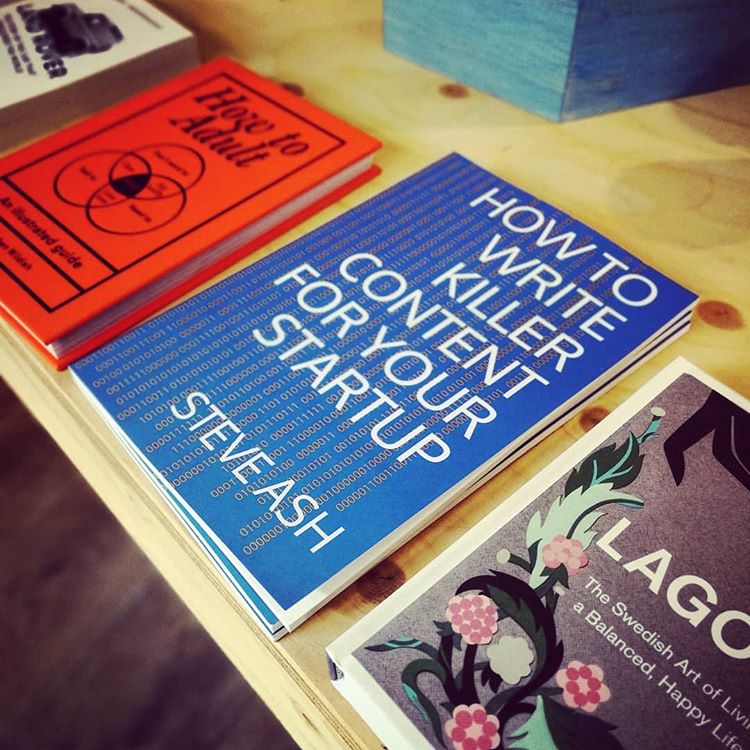
How To Write Killer Content For Your Startup
If your budget doesn’t allow you to hire a professional writer, what’s the next best thing? How about a book that shares some of the key tips for producing killer content?
How To Write Killer Content For Your Startup is your 101 guide to defining your brand, understanding your customers and writing truly exciting content.

 CommsBreakdown
If only companies would put these ideas into practice. Ideas based on human integrity and true talent to achieve the desired result.